Further into the Wilderness

Queen of the Mississippi. The only passenger boat we saw. Only two people at the rails. Business slow?

Except for a few turbulent areas almost like rapids, today was another peaceful trip at 11 to 12 mph with the engines almost coasting. We’re getting accustomed to enjoying the scenery and just relaxing. We passed a few downstream tows. Like us they were not pushing hard, letting the current do some of the work. The upstream tows were different. They were pushing as hard as they could against the current, whitewater from their prop wash boiling to the surface in waves as much as 500 feet behind them.

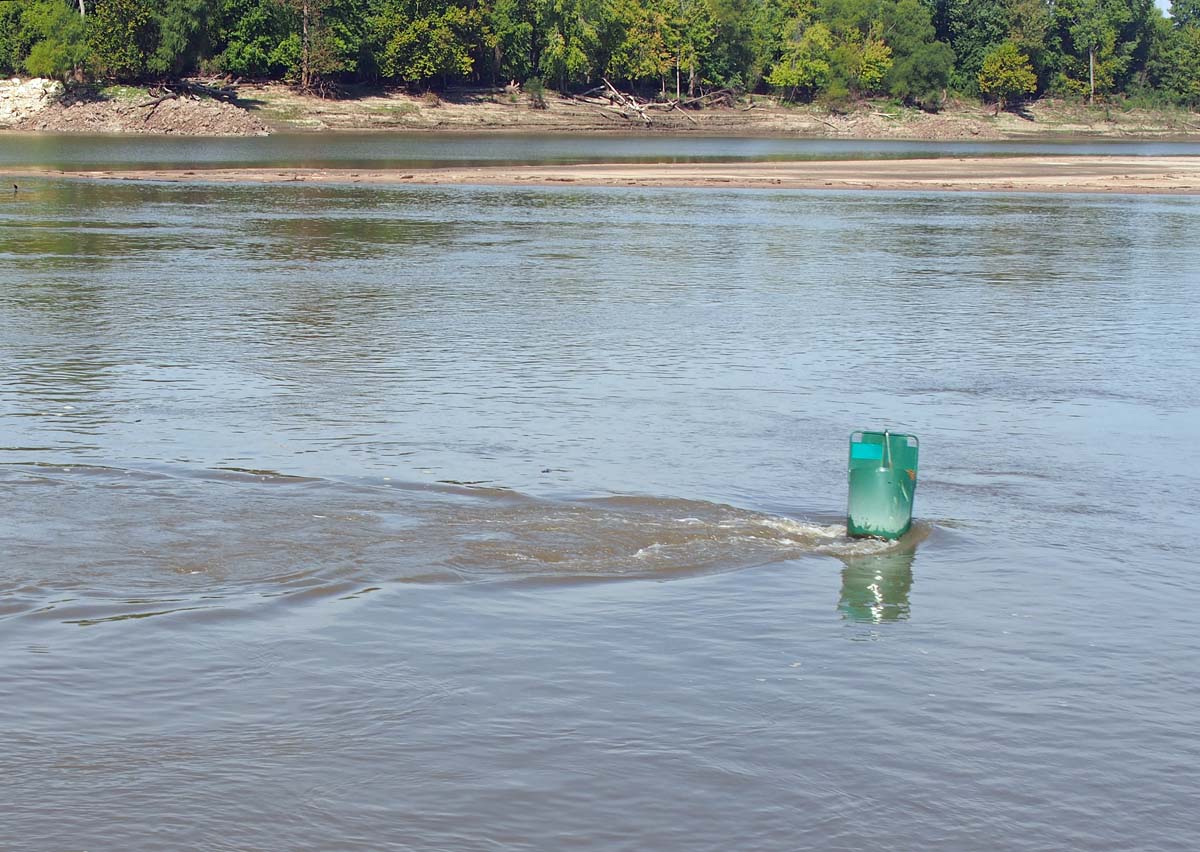
You can see the current. It reached 5 mph sometimes. We were flying.

After talking with Rayno last night we both decided to stop at Little River Diversion Canal off mile 49. If you’re looking for these places on Google maps it is “Castor River Diversion Canal”, then look east of that to where it meets the Mississippi. There is little or no current there, and what they have seems to run the other way sometimes, so a rear anchor is recommended.

Neither of us were set up to rear anchor conveniently, so I went in first, dropped anchor and backed out a ways and he went in after me, turned around and dropped his anchor a few hundred feet earlier. We both backed up and rafted to each other. Later two more boats came in and did the same thing closer to the channel exit. I guess they did not want to wrestle with a rear anchor either.

Still industrial. We saw no private boats except those we tied up with last night and anchored with tonight.

Its been awhile since we anchored, but it was really nice as evening came and everything was totally quiet in the canal. It was built in the early 1900’s so it has mature trees and looks like a normal small country river. We passed he town of Cape Girardeau is just a few miles north, but no noise or light pollution from it was evident. Anchoring is nice, but we’ve done it so little that I still get concerned about the anchor holding, and swinging around your anchor in these narrow channels could have us hitting the bank or other boats. I think it’s like all the other boating we’ve done. We’ll do it a few more times and get used to it.

Standard

Into the Unknown

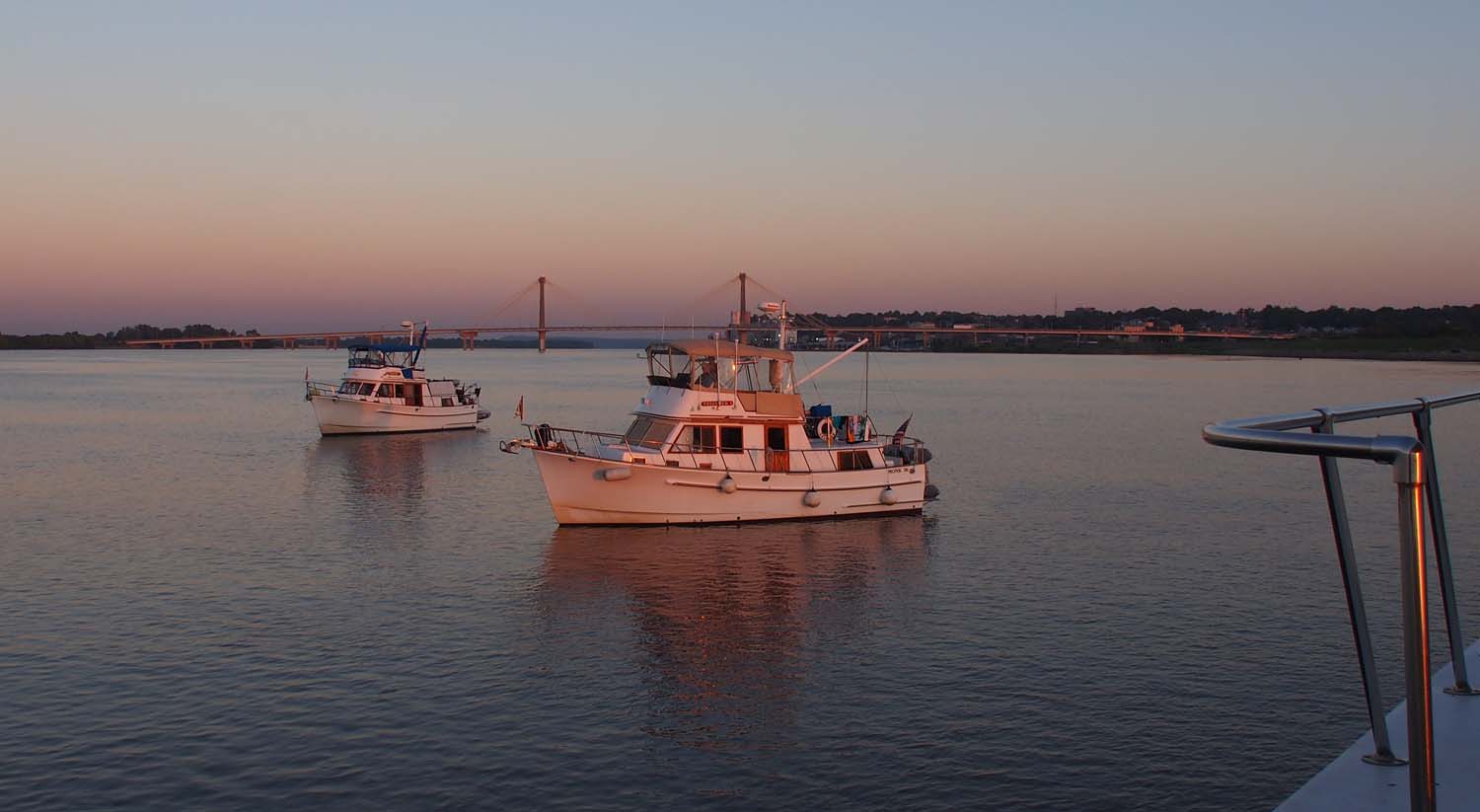
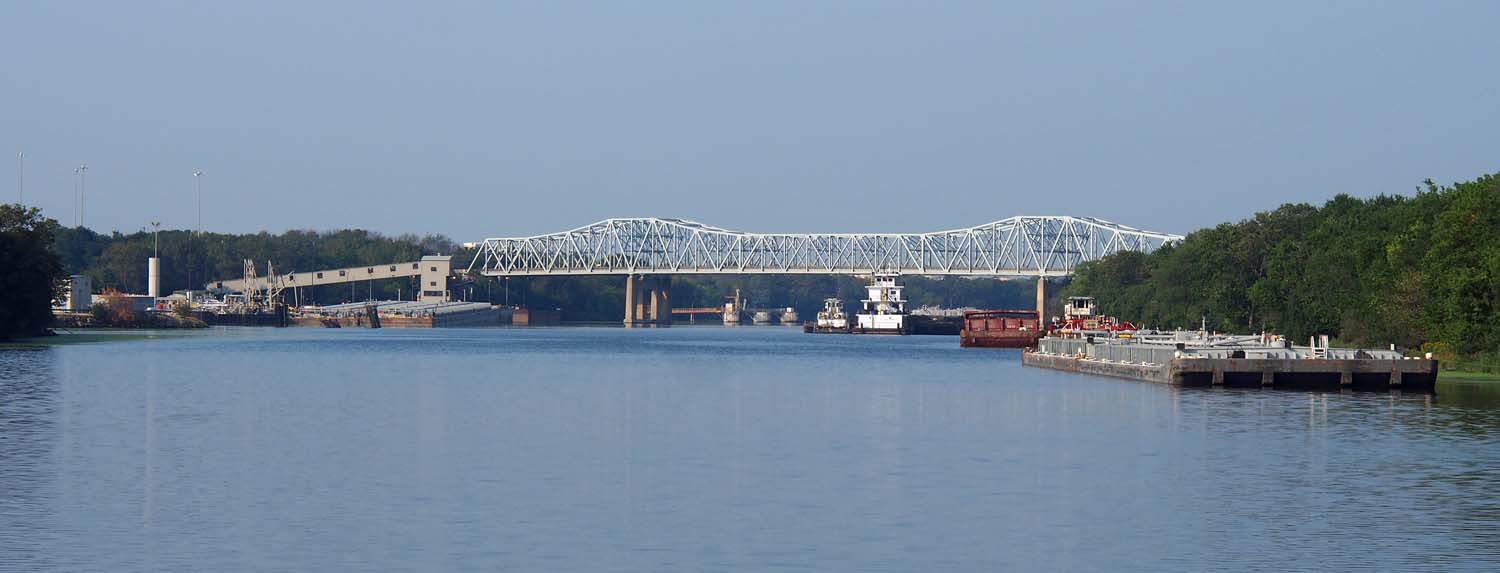
I stopped to wait for the Melvin Price Lock and saw these two behind. Alton Marina just under the bridge to the right.

We got up in Alton at mile 202 at 6:30 on Wednesday and called the lockmaster at Melvin Price lock. It’s only one mile downriver. He said a tow was locking up and would finish in about half hour. He said no one had been locking down for awhile so come on ahead. With a half hour for prep we were off at 7. We stopped half mile from the lock and noted four other trawlers had left and were coming in behind us on the left side of the river.

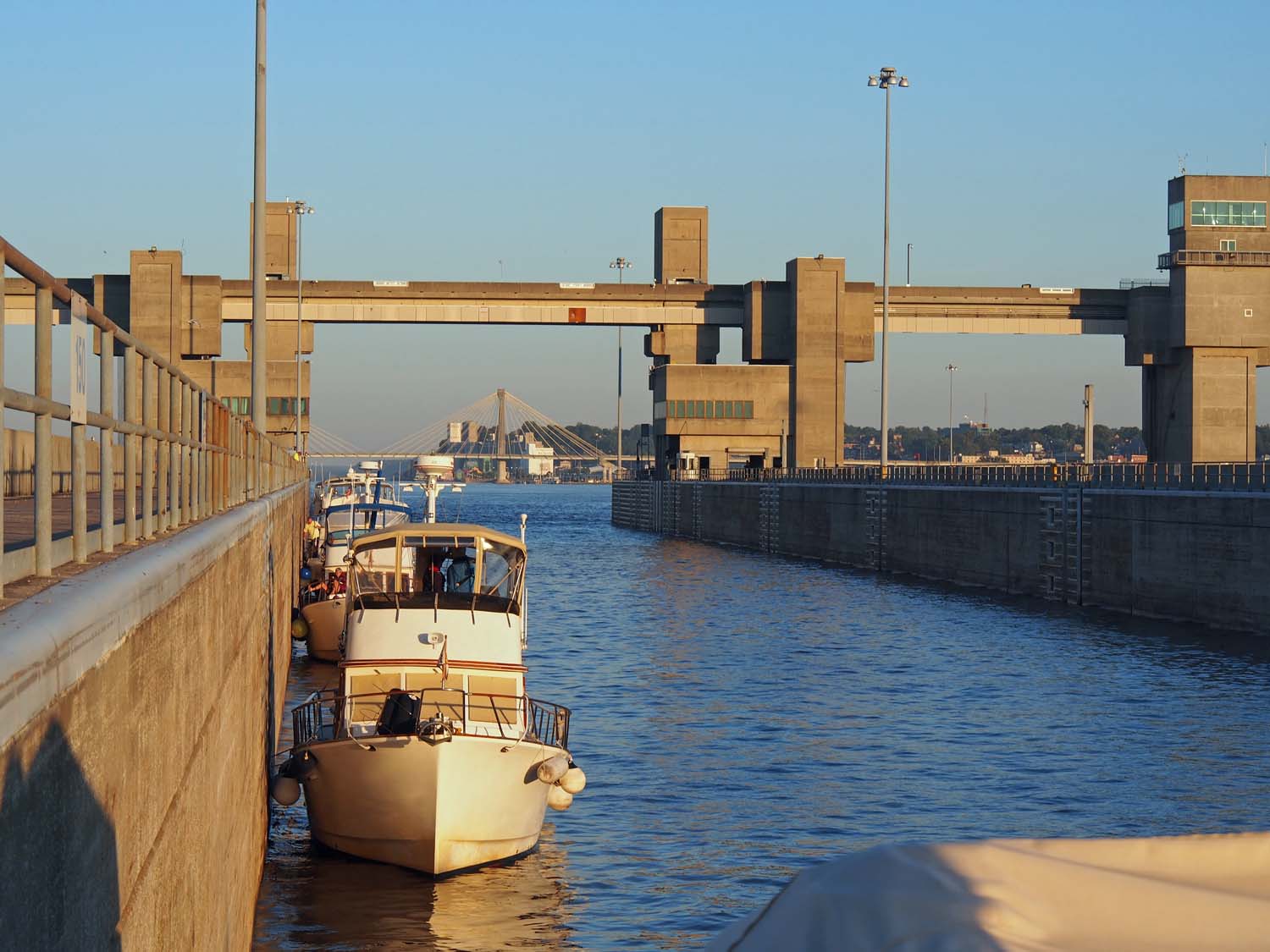
In the Melvin Price lock. Alton bridge again in the background.

We waited about 15 minutes for the tow to exit, tied off along the lock wall and locked down. I’ve heard that one third of the world’s (not just the US’s, but then, I guess they grow rice most other places) grain supply passes through the Melvin Price lock every year, so we were fortunate to hit it with no down bound tows.

4 miles later we all got to Chain of Rocks Lock as an up bound tow was leaving, but had to wait one cycle for a subsequent up bound coast guard boat that was in a hurry. These were that last locks we will hit until we have turned and gone up the Ohio River.

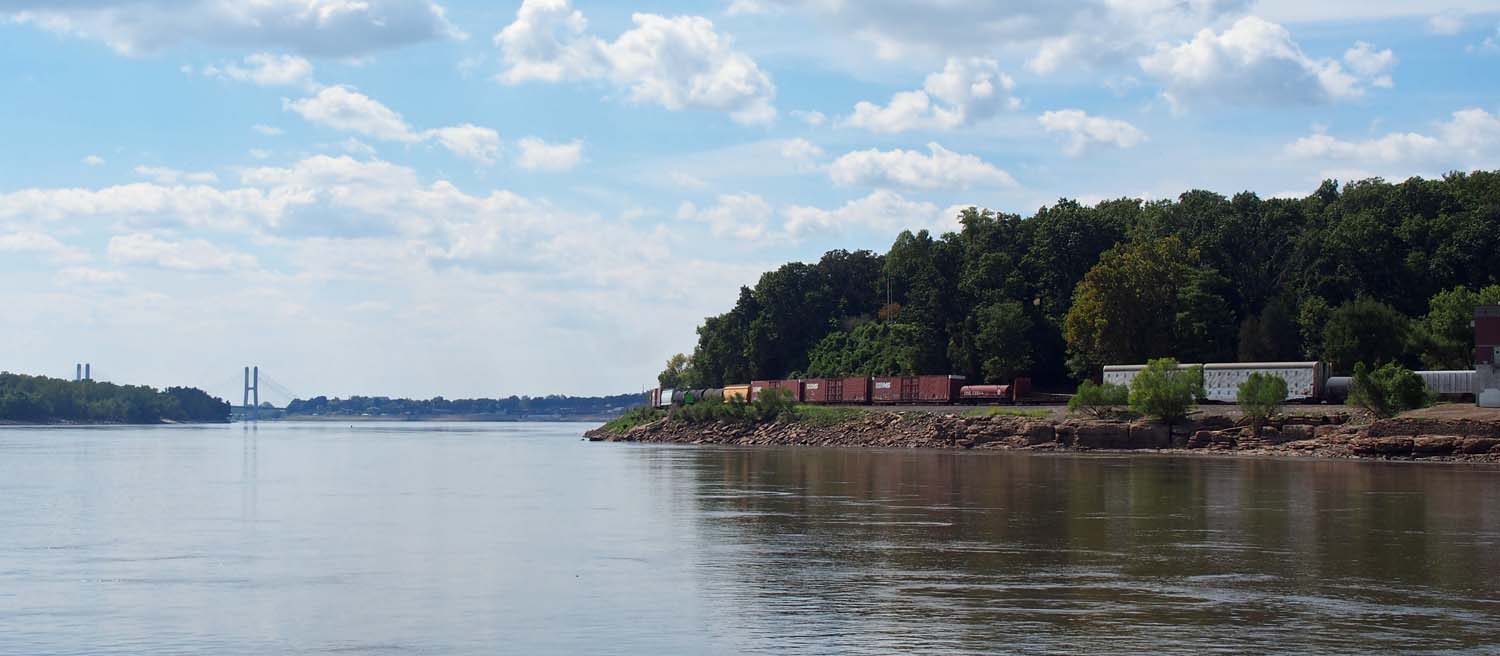
Once free of locks I backed off on the throttles and let the 3 – 4 mph current help us down stream at a dizzying 12 mph. The Mississippi is becoming more scenic with some hills and a few rock cliffs at the river’s edge. While we still see bridges, trains, a few factories and power plants, and of course tows we are pretty much in the wilderness. There is no recreational boating. Our four companions were the only private boats we saw, and two of these were faster and two slower, so we had the river to ourselves.

MSArch

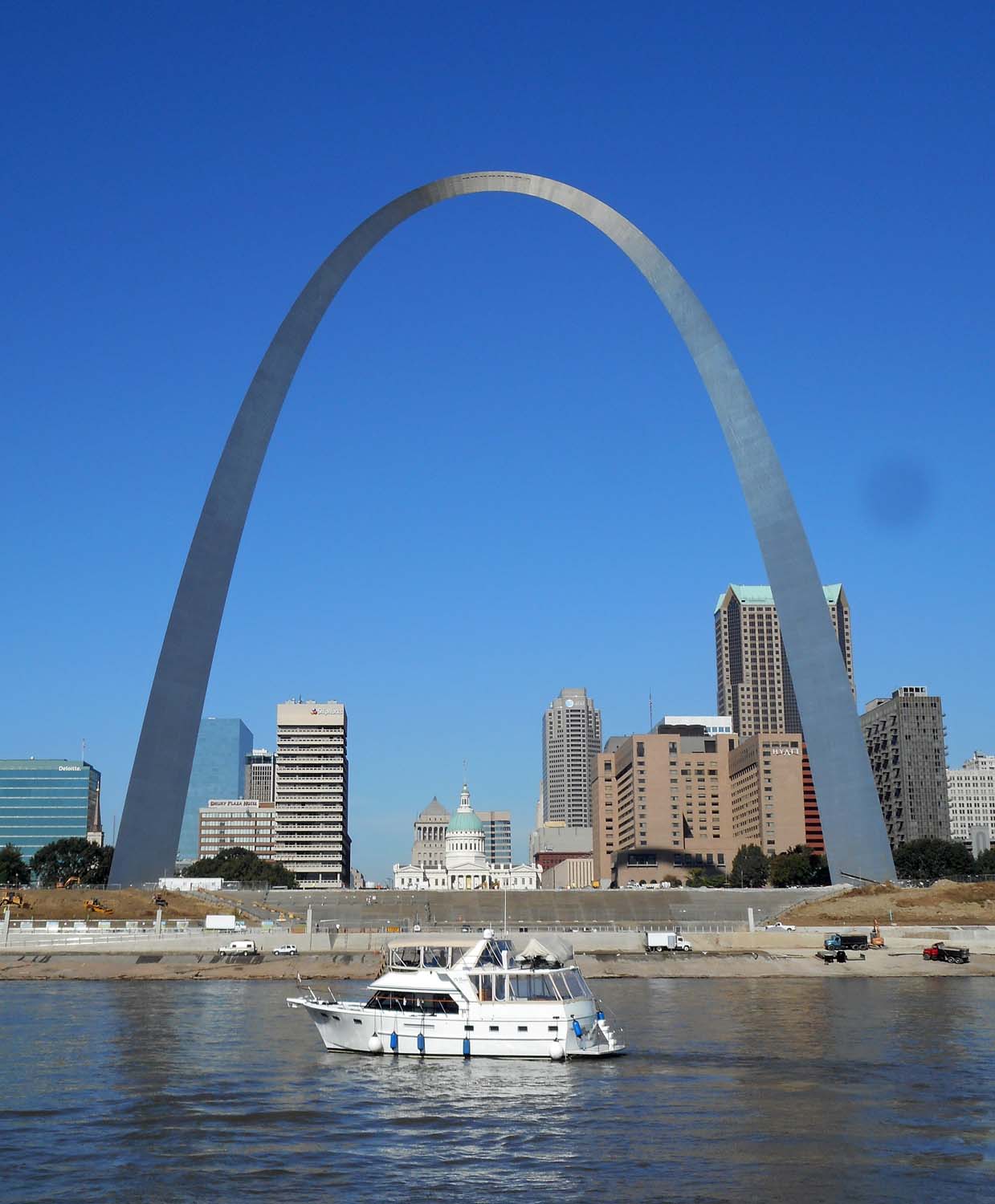
The iconic shot. Some loopers we went through the locks with took this.

We passed the only marina we’ll see until the Tennessee river, Hoppies, 45 miles south of Alton. It consists of three barges tied to the riverbank, which boats tie to alongside. We did try to stay there, but it was full for the next few days. We instead headed for the Kaskaskia lock and dam, which is on a channel branching off from the Mississippi at mile 118. It was built to allow barge access up the Kaskaskia River as far as Fayetteville 36 miles away, although none of that is on our charts. Traveling 84 miles was pretty easy since we got out of both locks by a little after 9 and had a strong following current the rest of the day.

We finally saw some river front, well river view, homes, but not many.

There is a long wall between the lock and dam just a few thousand feet up the channel where we tied up. Sue practiced throwing a loop of line around a cleat on the wall, securing us sufficiently for me to get on the wall and tie up the rest of the way. Later Oh Kay with Rayno and Patty came in and tied up behind us. Now three boats are here but there is room for many more.

No one has come through the lock across the wall from us, and all good boaters go to bed early, so it is very quiet here.

Standard

St Louis

ILArch

Sue and Paula in front of the Old Courthouse with the arch in the background.

We arrived at Alton on Tuesday the 15th, pumped out, fueled up, were in our slip and had our rental car by about 3 PM, so we went off to see St. Louis, which was about 20 minutes away. We walked around downtown and had dinner. We also were going to walk in the park below the arch but found the entire area was dug up for renewal, but at least learned how to get to the arch the next day.

The next day we went up inside the arch. The view was a little restricted, but it’s one of those things you just have to do when you’re there. Learning about the building of the arch as well as the “train” that took us up was interesting. The old domed courthouse where the Dred Scott decision was made is often pictured with the arch as a background, and we stopped there to look at the museum inside.

ILFromArch

From the arch. Loopers photographing each other’s boats in front of the arch, just like at the Statue of Liberty.

Our visit to the Missouri Botanical Gardens was a high point. Said to be the oldest botanical garden in North America, the large trees and mature plantings as well as several fine old building’s, including the founder’s mansion spoke of its age. We just had an overview of the Japanese gardens as we went by in the tram, but it was a place where we could spend more time.

On the 17th we all went to the airport. Sue and I flew to Florida for our appointment while Jim and Paula flew back to their home in Davis CA. Jim and Paula were with us for a week on the Illinois River. Along the way there were lots of tows but little private boat traffic. The towns were small. Hardin IL at the Riverdock restaurant dock had 1000 people.

Much like it was for the settlers in covered wagons, St Louis is a jumping off point for loopers. Tomorrow Sue and I leave for more travel on the Mississippi, Ohio and then Tennessee rivers. There will be few if any marinas for many miles. Hoppies, where most loopers stop, is full for the next few days, so we plan to skip it and tie up on the outside wall of the Kaskaska lock, 84 miles downstream from here at Alton. That should not be a problem if we can get through the Melvin Price and Chain of Rocks locks, both within 3 miles of here, without more than a few hours delay. We’ll call the lockmaster first thing tomorrow morning.

After that we will reach the Ohio River and probably need to Anchor out to the side of the channel for a night or two. There we will hit the Olmsted, 53 and 52 locks before we turn right at the Tennessee River. The last two of these are famous for extreme delays due to a new dam being constructed.

Standard

Looking to Tie Up

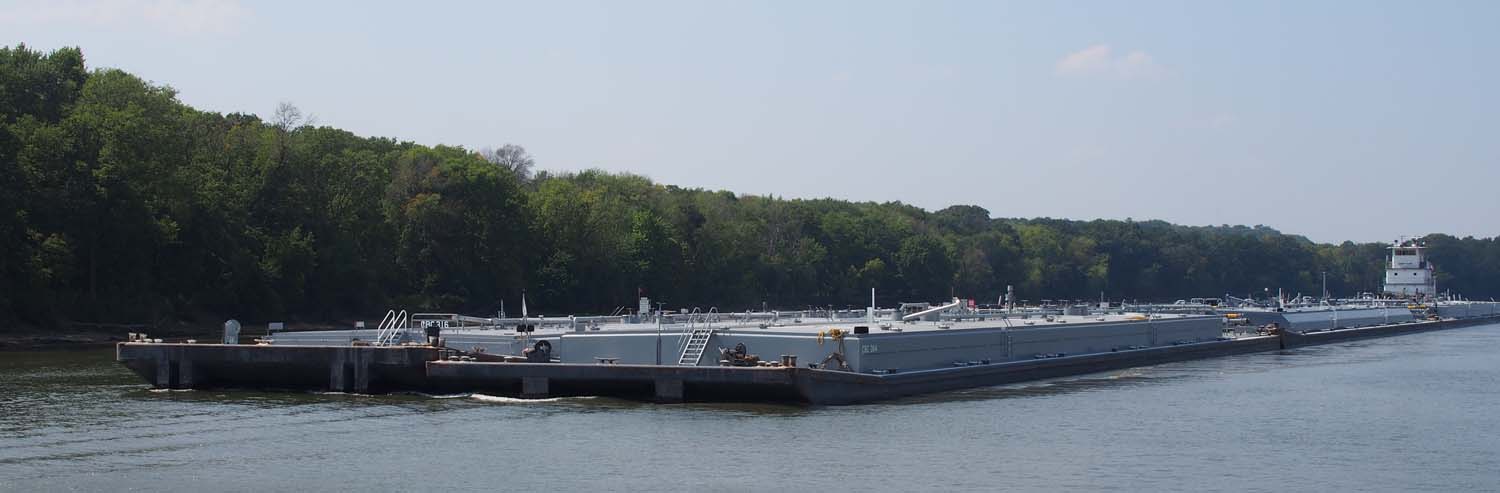
The tows are getting bigger. This is the first 3 x 5 (3 wide by 5 long) that I remember seeing.

We left Tall Timber with 138 miles to go to Alton. Forty miles from Tall Timber we hit the LaGrange lock. As with all locks, we called in advance. They told us to come ahead. We got there and went right in and locked down while floating in the middle with another trawler tied up at the front left. As we left the lock there was a tow approaching. It was slowing for the lock and would take another ten minutes to reach it, so we made it through just in time. This was the last Cal Sag – Illinois river lock for us. We were fortunate that we never waited more than ten minutes for any of them. We had gone from Lake Michigan’s 577′ elevation down to 419′ where the Illinois River meets the Mississippi.

There was no obvious place to stay between Havana and Alton. At first I thought about tying up at the LaGrange Lock 58 miles from Tall Timber. They sometimes have barges above where boaters can tie up, or allow anchoring in the area below the dam. I called them and found that there were no tie up places above and the currents below were too strong for anchoring. A couple of times along the way we saw barges on the bank where we might tie up. We called a nearby towboat and asked about one and found we could use it but would be thrown off at 6 AM when it was to be loaded. The second time we found a candidate its company did not allow tying up.

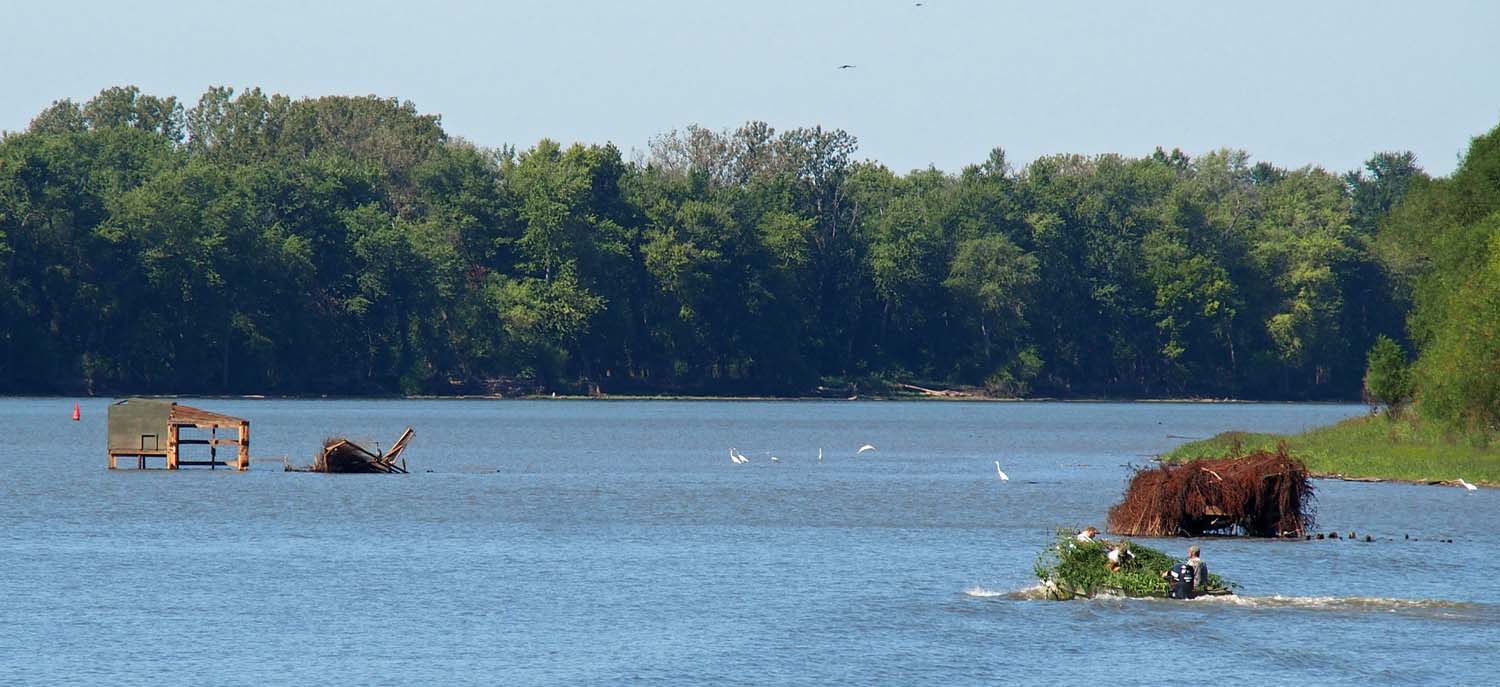
We saw structures that appeared to be duck hunting blinds. These people are supplying the cover for one of them.

By this time we had gone far enough that we decided to try for the Riverdock restaurant’s dock. That would give us a total 100 mile run for the day. This was doable since we had no more locks where we could have a possible delay and the restaurant has a good reputation as well. I called them but just got a machine with a simple “leave a message” that did not seem quite right. A check on the internet showed the Riverdock restaurant had burned down June 5, 2015. Was their dock still there? Since it probably did not burn down with the restaurant we decided to go for it.

On our way there we got a call back from the Riverdock’s owner. She had received my message and said the dock was still there and invited us to use if for free. Soon after that we arrived and tied off. Another looper who had also left Tall Timber that morning arrived shortly afterwards and Jim and I helped them to tie up behind us. We were now 39 miles from Alton Marina. We would easily get there tomorrow, a day early. That would give us much of Tuesday as well as all day Wednesday to see St Louis.

Standard

Havana, IL

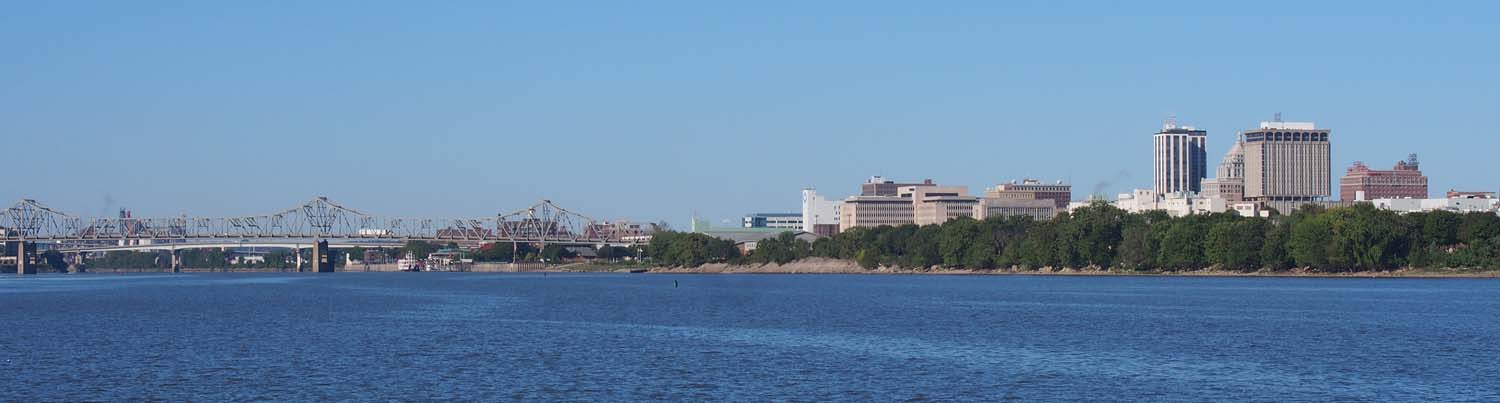
We passed downtown Peoria on our way south to Havana.

On Sunday we traveled 48 miles to the Tall Timber marina in Havana IL. We took that trip slow and enjoyed a leisurely day with the river pretty much to ourselves except for a couple of tows coming the other way. We hit the Peoria lock a mile after we started. Its gates were opening just as we got there.

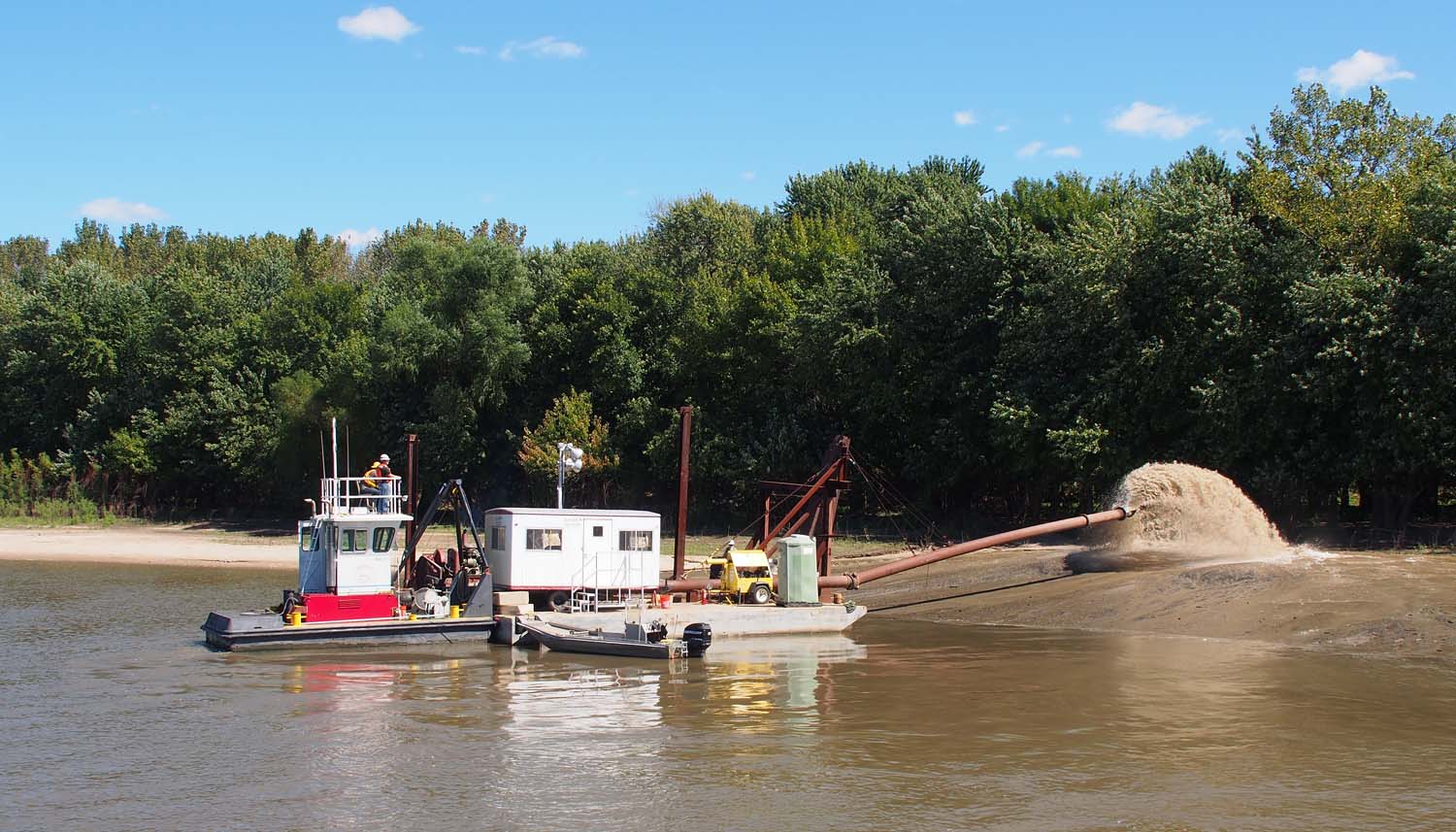
We had to wait a few minutes for a dredge to move out of our way. Its output was a thousand feet downstream.

There are not many marinas or other stopping places outside of anchorage areas on the Illinois River. Tall Timber, IVY and the Peoria city dock were about the only places we could fit into between Heritage Harbor and Alton. Tall Timber was a small marina and had five looper boats which filled it up tight. We were the last in and it was a real shoehorn job with four people handling lines to get us to our dock. We walked around a little in Havana. They had a minor festival going that evening in their downtown area.

Standard

Peoria and the Caterpillar Museum

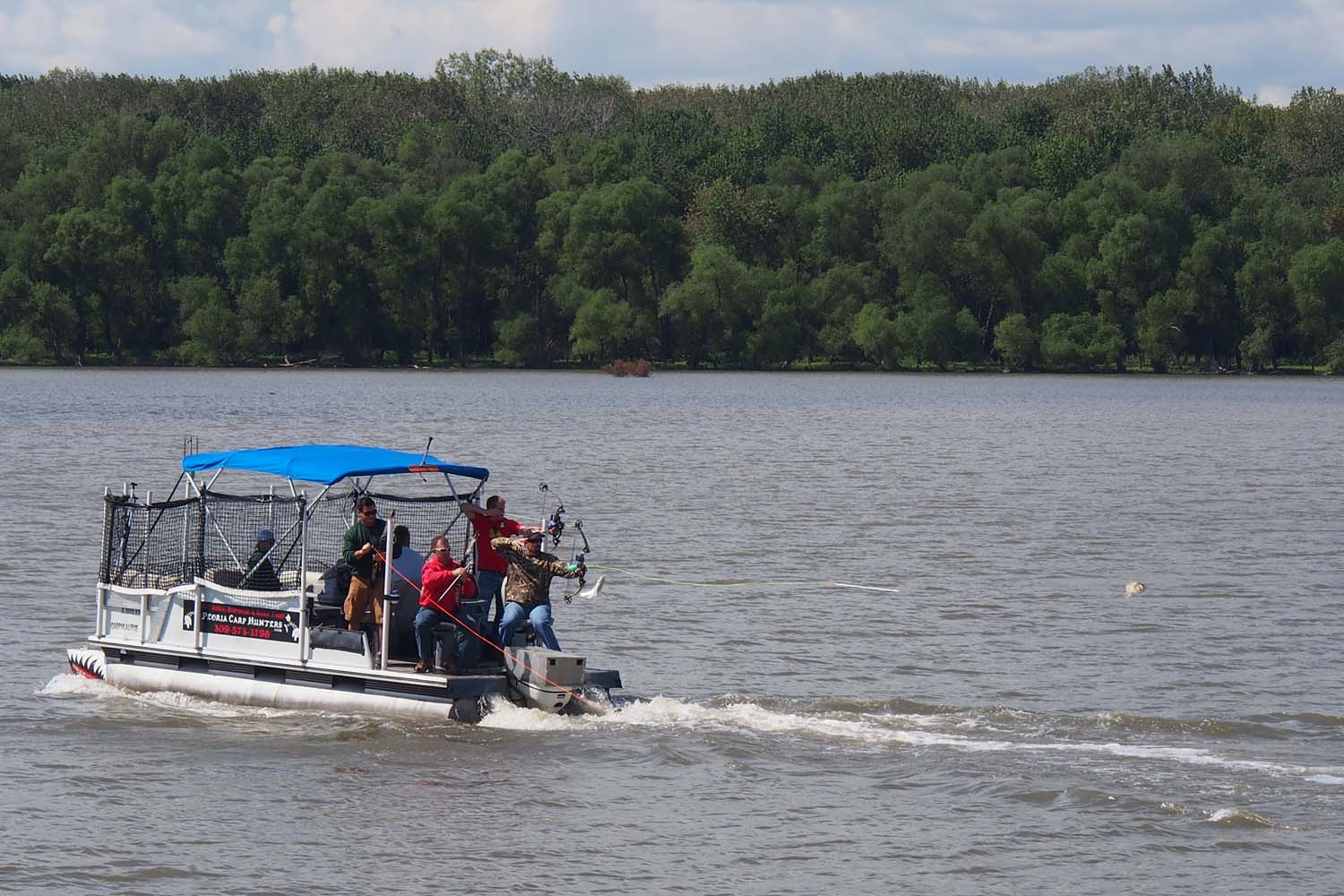
Hunting the wild Asian Carp. Two leap here, one being shot at and another just at the back of the boat.

Jim and Paula joined us on Thursday the 10th while we were still at Heritage Harbor Marina. We as well as they are scheduled to fly out of St Louis on the 17th, they to go home in California and us to fly to Southern Florida for a medical appointment. We have 258 miles to go to Alton Marina where we will dock while we leave the boat. I know the distance because it turns out there are mile markers on the Cal Sag – Illinois River as well as the Mississippi below, so I’m able to give accurate distances.

We left the next day for Peoria. The gate was open when we hit the Starved Rock lock and we went through quickly. We wanted to tie up at the Peoria city docks, but they had room for only two boats our size and were full, so we were at the IVY Marina five miles above Peoria for two nights.

We did see evidence of the famous leaping Asian Carp, but our boat did not stir them to jump. Smaller boats with faster rotating propellers can get them to jump, although we never saw the spectacular scenes like those in some of the internet YouTube videos. Sometimes during our stay at Heritage Harbor Marina I could stomp the dock and see and hear 30 or more swirls in the basin as the fish moved rapidly away from the surface, but no leaps.

ILCATTruck

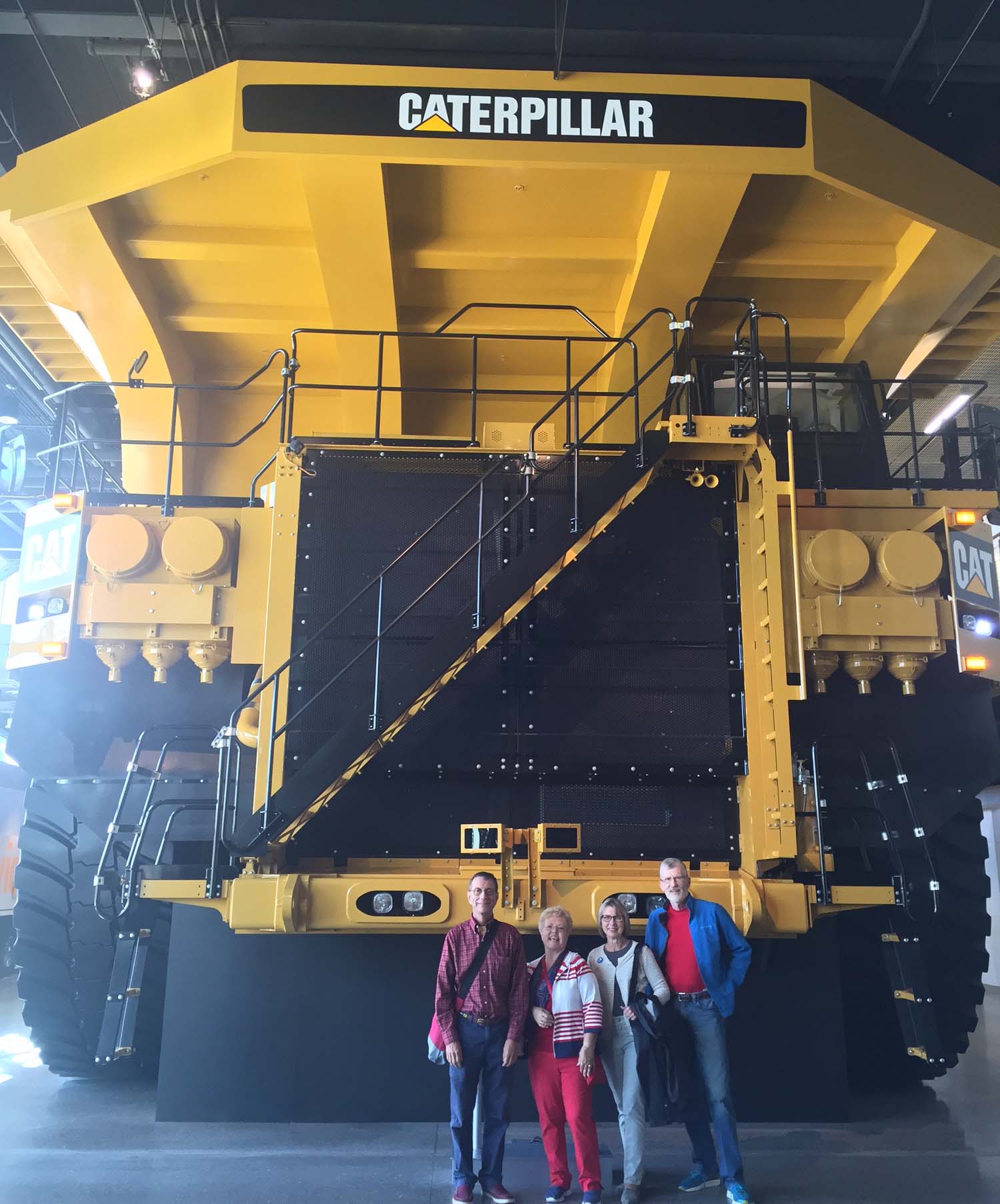
Jim, Paula, Sue and I in front of the largest dump truck Caterpillar makes.

Jim and I spent the next day, Saturday, seeing the Caterpillar visitor center and museum in downtown Peoria. There was a natural history museum next door where Sue and Paula spent the morning. After lunch we all returned to the Caterpillar museum. Sue and I got in free since we have two Caterpillar 3208 diesels on our boat, making us Caterpillar customers.

Standard

Holiday Travel

Since we knew no one would come out at Brandon Rd, we waited in the channel center for the gates to open.

After our friends waited so long to get into the Brandon Rd Lock I wondered how long it would be for us today. When I called at 7 this morning the lockmaster said he would start filling the lock and would have it ready in 40 minutes. We got ready in 20, got there in 10 and sat for 10 in front of the lock when the doors opened. We were the only ones there, locking down 34 feet in a 600 by 110 foot chamber. That much water would do your lawn for a number of years.

Dresden was our second lock of the day and 1½ hours from Brandon Rd and Marseilles would be the last 2½ hours further. We called each as we exited the previous lock and were told basically to come on, but no guarantees. I think calling reminds them to wait for us if they are just locking through a few other private boats. Might as well get their money’s worth for all that water.

We went through Dresden alone after just a few minutes of waiting. They wanted us on the left wall so I turned the boat 180 in the lock for a starboard tie, where our best lock fenders are. Marseilles was open and waiting for us. It had three small runabouts on the left wall while we tied up on the right.

Recreational on a few holidays and weekends, but industrial every day.

I counted thirteen small boats passing a tow at one time. If I was tow captain I’d be getting nervous.

This is still an industrial area. We passed coal fired and nuclear power plants, various factories, piers for loading different types of stuff into barges, etc.

We passed two tows going the other way and none going our way, far less than yesterday. What we did see after Dresden was loads of small boats. A few were fishing, but most were just racing about with many pulling skiers or kids on floaters. Hot weather Labor day boaters were out in force.

Labor Day boaters.

Where were the tows? If I were a tow captain, today would be a great day to take off. If your kid falls off a tube 1000 feet in front of a 5.5 mph tow you have two minutes to get them out before the tow, which takes a mile to stop and may be 100 feet wide, runs over them. Those little boats pulling people scared the tows off.

So with few tows to delay our locking we arrived at Heritage Harbor marina in Ottawa by one. We’ll stay here until Jim and Paula come.

Standard

Downtime in Joliet

Star Gazer on the wall in Joliet. No one else here today. Harrahs has a small casino in the background.

We’re the only boat sitting here on the free wall in Bicentennial Park in Joliet IL. There were four of us here yesterday, all going through the Lockport lock together and coming here at the same time. We are not in a great hurry now. We’re meeting up with my cousin Jim and his wife Paula on the 10th or 11th and don’t want to be too far from Chicago Midway airport.

We’ve seen maybe 10 large tows come by, passing about 50 feet from us but making very little wake. Other than than our recent mates here, we’ve seen one private boat come by. Those four are the only other private boats we have seen in the entire time on the Cal Sag. This does not appear to be a recreational boating area for anyone but loopers or maybe other long distance travellers.

In the Lockport lock yesterday with three other boats. Plenty of room.

Tomorrow we’ll go through the Brandon and Dresden locks. One of the two valves is out in Brandon, so it takes 40 instead of 20 minutes to fill. Brandon is only 1½ miles away. The other three boats were leaving today, but were told to wait here by the lockmaster due to a large tow that had to be broken up to get through. They finally left at 11:30. I’m hoping we will get through more quickly tomorrow. Government and commercial boats have priority over us, but lockmasters will normally not make you wait more than three cycles, and can let you in with a tow if there is room and it is safe to do so.

Barges everywhere. The only place to store them is the side of the canal.

Hopefully more adventures await beyond just long waits at large commercial locks. Certainly what we’ve done so far has always been new to us and very interesting. There have been so many high points it would be hard to pick just one or two. Whatever comes we can always count in it being different.

I think our least favorite part, especially Sue’s, was pounding down Lake Michigan. Most of our times out on that have been a bit rough. In talking with various local boaters we’ve heard that we were just here in a few weeks of bad weather. It can be great for weeks at a time as well. It may well be better for us next year, and with prevailing winds usually from the west, we’ll make it better because next year we’ll come down the Wisconsin side.

Standard

An Industrial Day on the Cal Sag

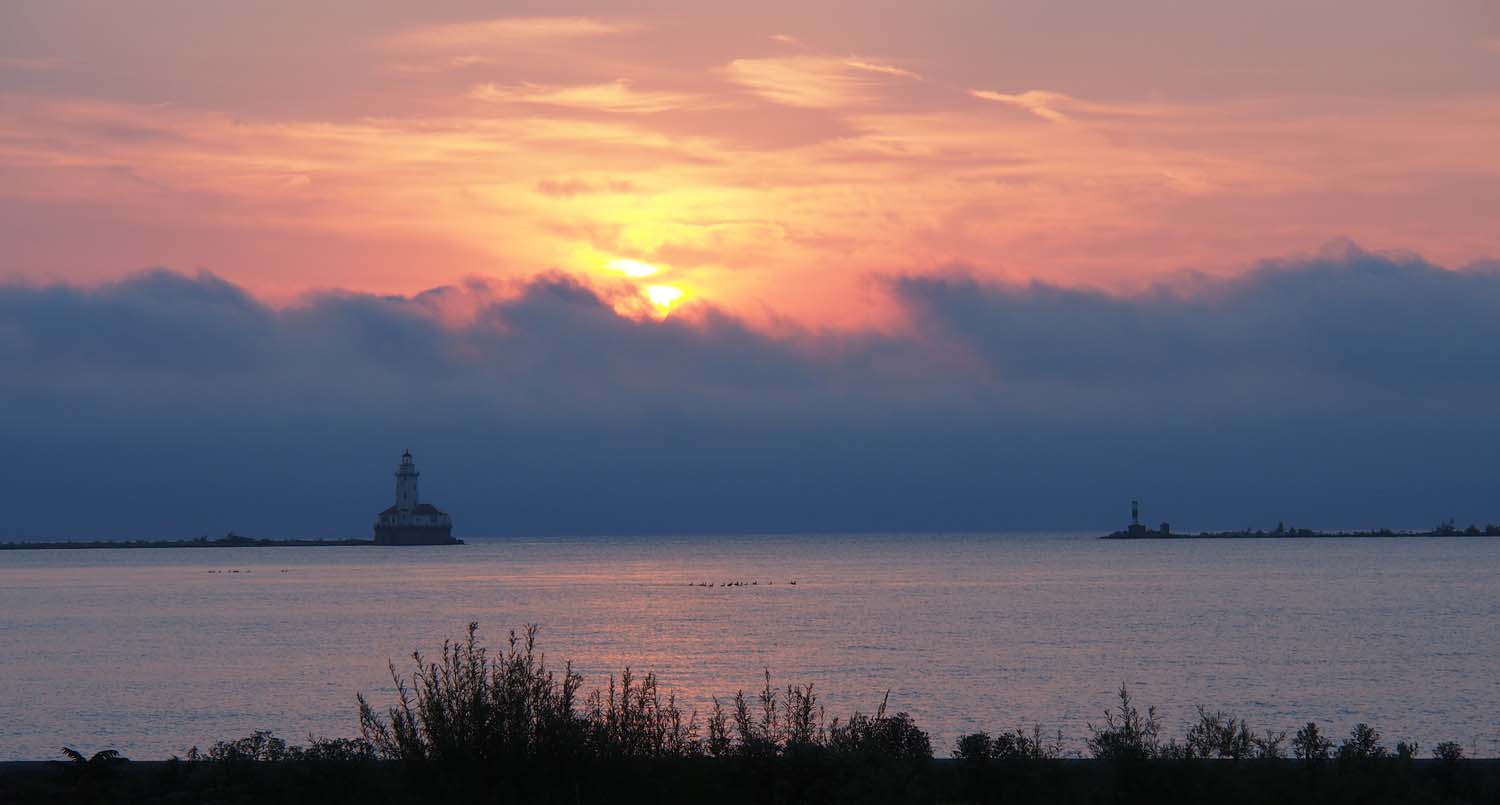
Just before we left. Looking east over our marina breakwater to the outer breakwater entrance.

We started out at 7 AM and arrived at Hammond Marina near the channel entrance at 8:30 when it opened. I wanted to fuel up to make us float as low as possible to give us clearance for low bridges. I already had filled our water tanks last night. If I had done it right we would have filled up before docking in Chicago and gotten into the river earlier than we did. As it was we had plenty of time, in part because we had very little delay at any locks or bridges

Taken as we left our marina.

The Cal Sag Channel and Calumet River have quite a history. They have supported heavy industry from the 1870’s and have seen a lot of pollution and recently restoration. There were massive bridges, factories, refineries and a great many barges and tows serving them. I don’t know about natural beauty, but it sure was interesting.

Our grandsons should have been with us. Trains every few minutes. Five bridges in this picture.

We eased under bridges with one foot clearance while trains were rumbling across them. We had a train going right over our head at least three or four times. On a particularly close bridge I had to stop and wait for a train to pass so it would be quiet for Sue and I to communicate. She was at the controls easing us under while I watched up top to see if anything would hit. Because of recent high water in the great lakes clearances on the first twelve bridges, before the first lock, were much less than in our references, so we had to be careful.

Bridges stacked on other bridges. I got under all these, even the low one. It had a train on it as we went under it.

We hit more bridges in less distance than I have ever seen anywhere whether in a car or boat. Some seemed almost stacked on top of each other. I called to ask one bridge to open only to be told it was open, right over me. It was the next bridge I needed to have open!

We had to stop for tows a few times. Once we waited while a tug took up the whole channel as it pushed a barge sideways into a group of barges. Tugs pushed barge groups up to five long. Steel barges were parked in groups thousands of feet long along the canal bank. The canal was narrow enough that the parked steel barges were close enough that they threw off the Autopilot compass and pulled us right into them, forcing me to steer manually for considerable distances.

There were two locks today. The first only 12 bridges into the canal. It was 1000 feet long and more than 100 feet wide. Another boat got there well before me, but the lockmaster told me he waited until I got there to because he saw me coming on AIS. Lockmasters here all use AIS to track their main clients the commercial tows, all of which have AIS.

The tow leaving our second lock has only two barges, but they were long ones.

The second lock was much later, just 5 bridges before our stop at the Joliet free dock. When we arrived three other boats were waiting. Two of them had already been there an hour and a half. As we pulled to the wall a tow pushing two very long barges came out of the lock the other way, after which we could go in with the others to lock down 38 feet. So if I had not filled up this morning, I would have started into the channel no more than an hour earlier and would have ended up waiting that time at the second lock instead. As it was we had no more than a ten minute delay anywhere, a new record?

A mile out from the lock we hit the Ruby, Jackson, Cass and Jefferson St bridges, all of which were able to draw for us just a few minutes before their 4:15 rush hour cutoff. So we made it to Joliet free wall, just after the Jefferson St bridge at 4:15, but just barely.

Standard

Weather is Here, Wish You Were Beautiful

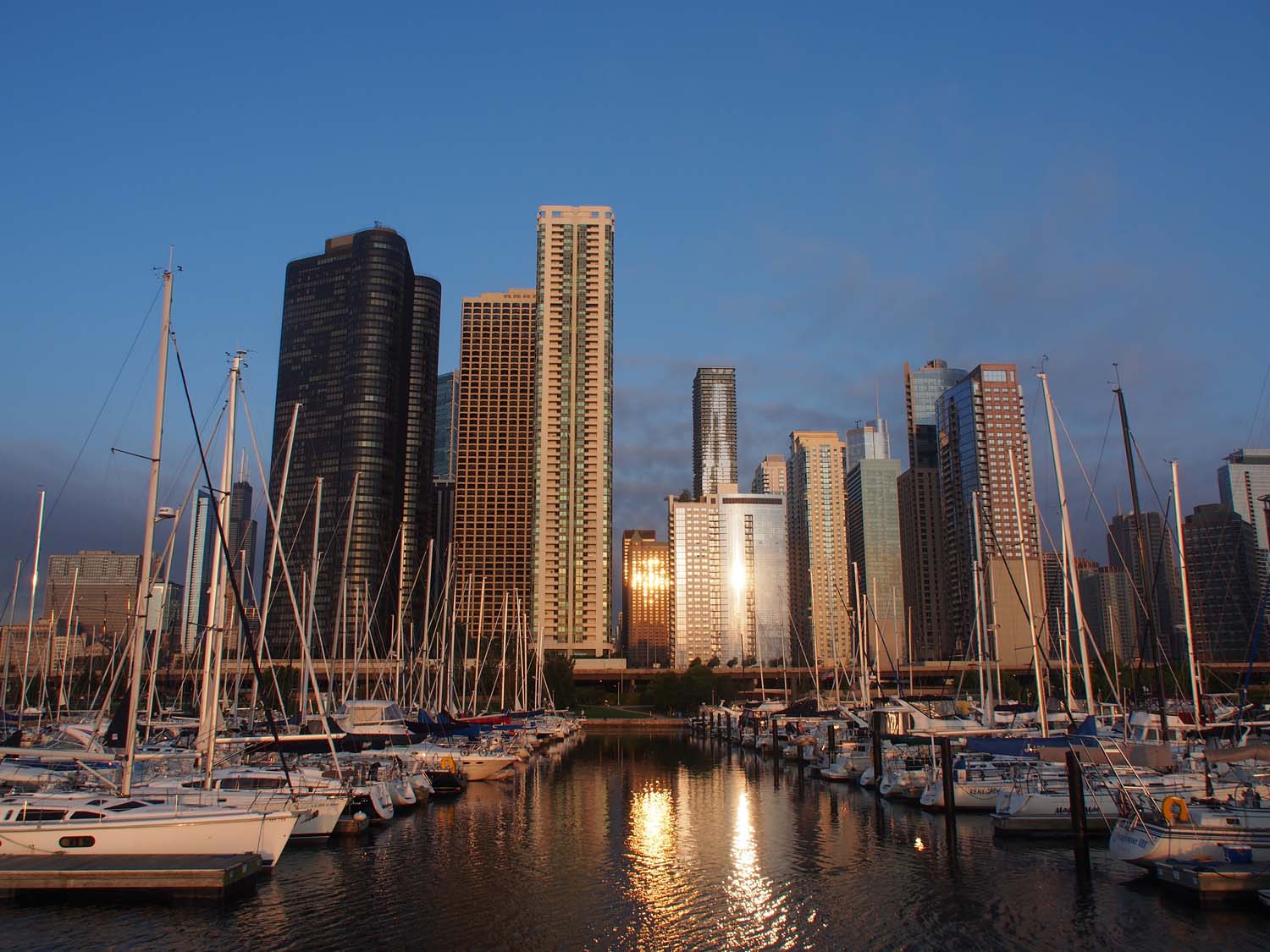
Chicago from our boat in DuSable marina.

We’re still here after four nights, and the weather has been great the whole time. We’ll leave tomorrow morning (Friday). After arrival on Sunday we took a cab up to the small triangular Mariano Park at State St and E. Bellevue Pl. This is a restaurant area near the north end of the State St shopping area. Weather was great and restaurants were packed with wide sidewalks everywhere full of people eating outside. If this was Sunday night what would Friday be like? We only had to wait 20 minutes for a table.

Afterwards we stopped at a Barnes and Noble a few stores away. Sue sat in the coffee shop looking at some Chicago books while I looked around other areas.
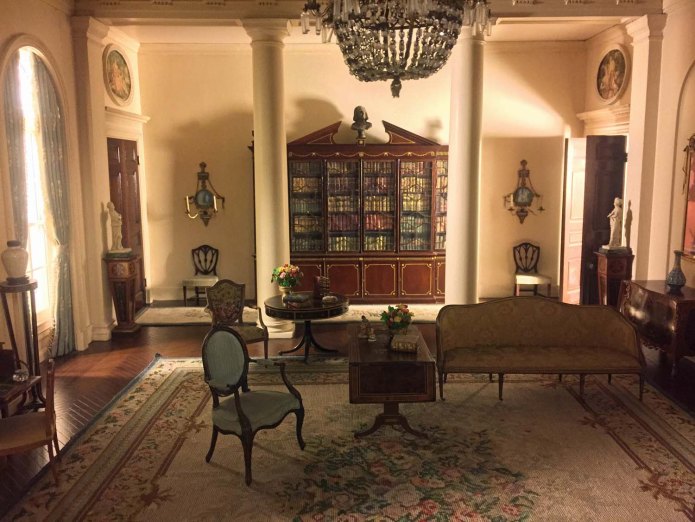
CHMiniature

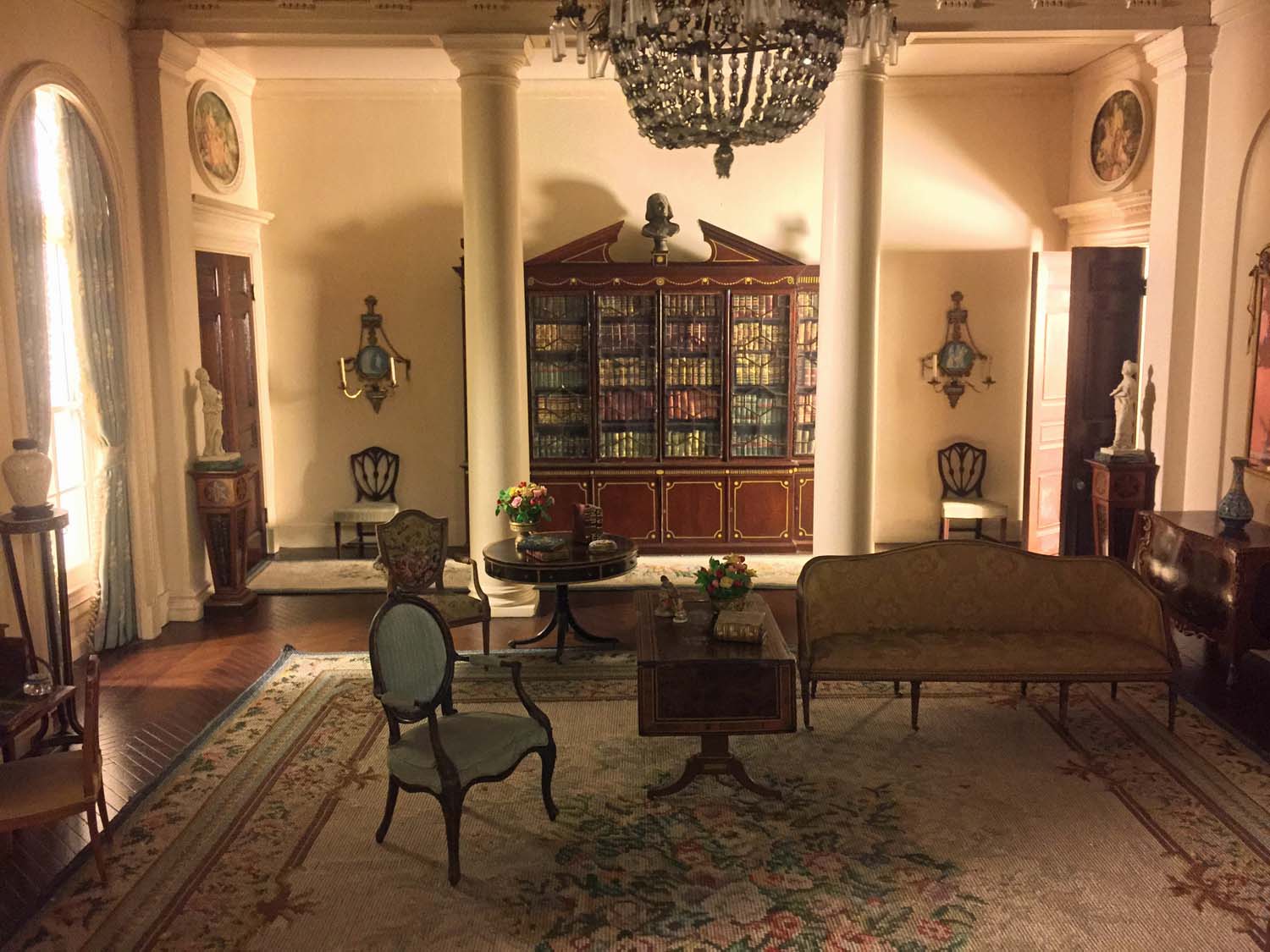
I really liked the miniature rooms in boxes maybe 1 1/2 foot on a side. Hard to pick just one out of our pictures.

Monday was the big art museum in Millennium Park. We stayed until closing and missed whole sections we’ll have to see next year, and that’s without any modern art or impressionism, which are considered major parts of that museum. We had dinner at Panera Bread across the street and Sue then went to the T J Maxx a block away while I hit the comics store across the street.

CHMuseumLunch

Sue loves museum restaurants for the view and setting. I like them because food is usually unusual and good.

Tuesday was a walk through part of Millennium Park and then a stint on the open top Big Bus to get a good overview of the loop. Weather again just right. Mid eighties and sunny. We hopped off for lunch at the Corner Bakery and again for Sears Tower  and then got back on for the rest of the circuit. On the way we saw the water taxi stop and decided to come back around to that.

CHGlassBox

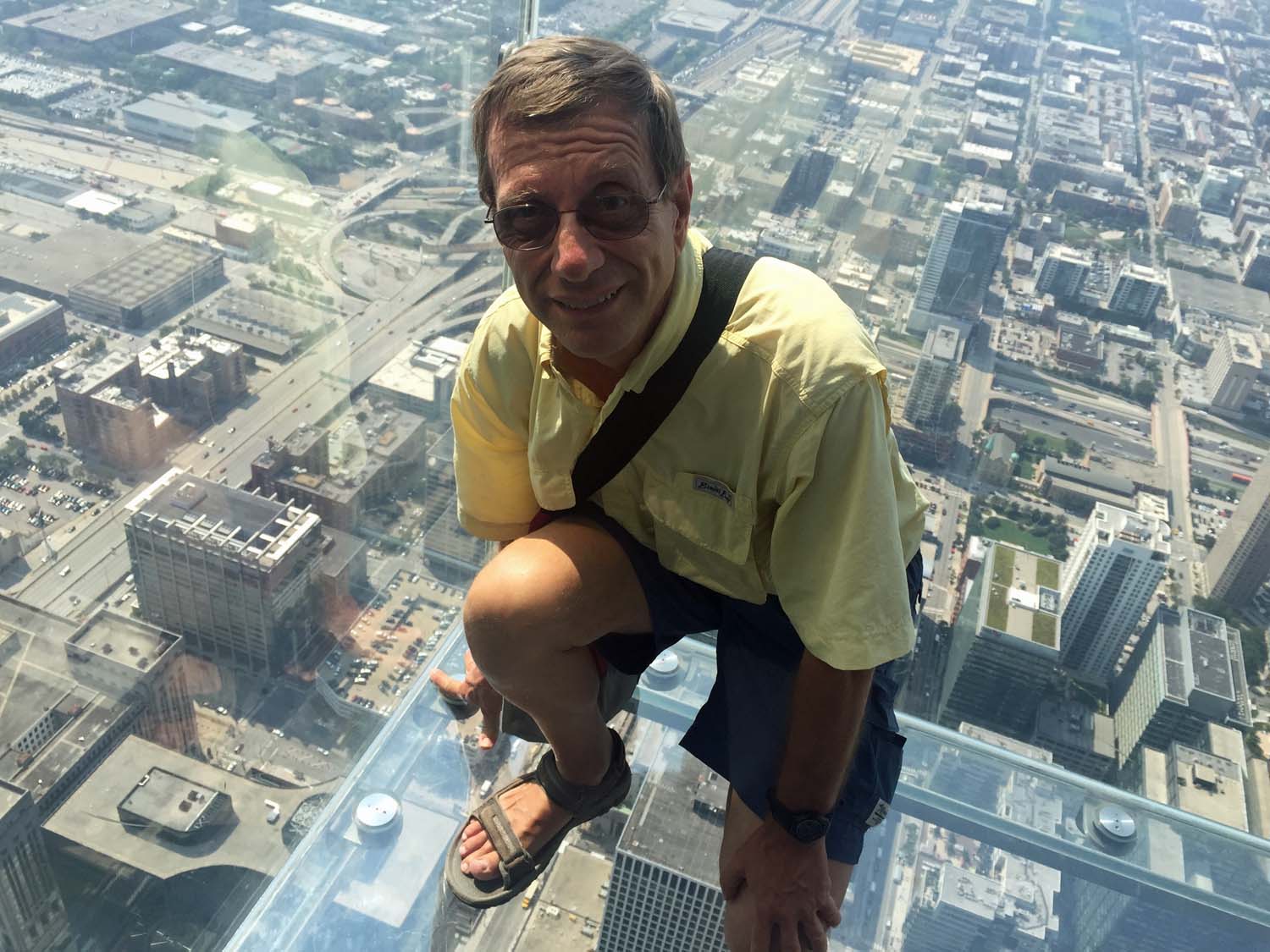
Waited in line to take selfies in the glass box in Sears Tower. Didn’t work, but Sue’s pic of me turned out.
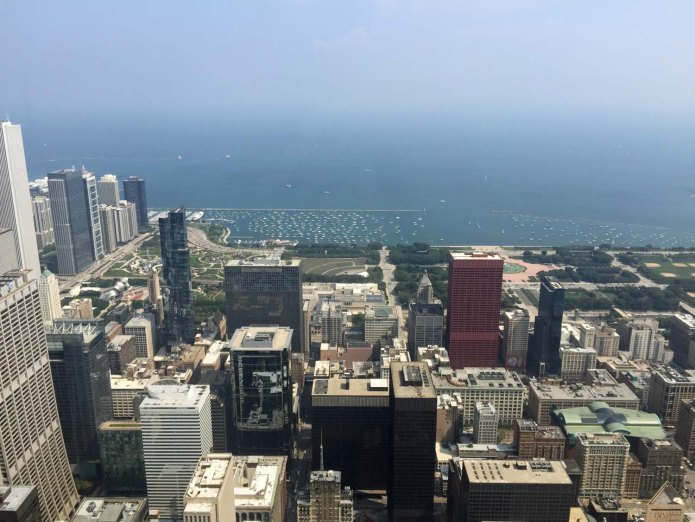
CHMarinaView

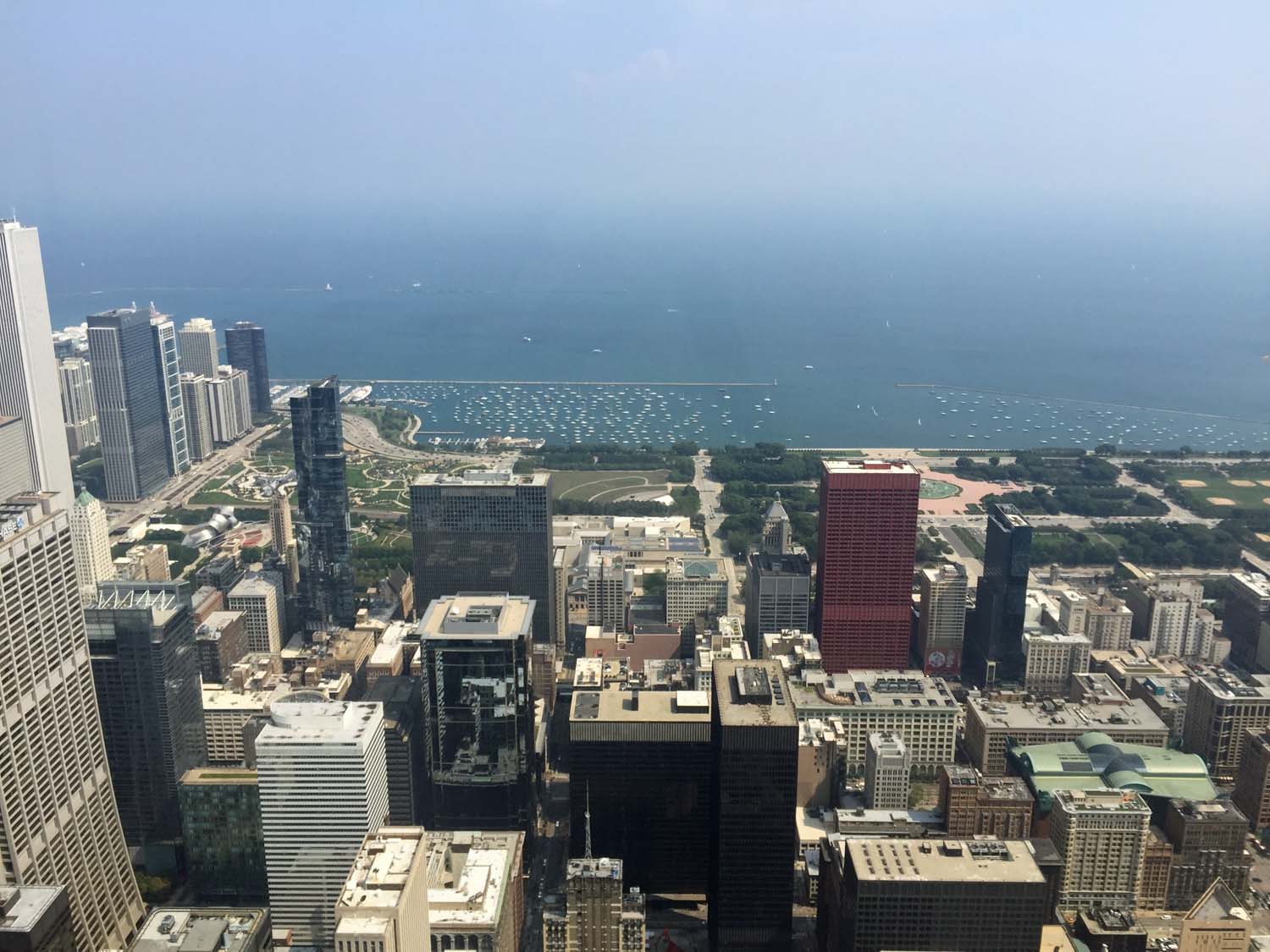
The mooring area on the way into our marina from Sears Tower. Our marina is left of it behind buildings.

The water taxi goes through nearly all of the downtown part of the Chicago river, going as far as Chinatown on the downtown south edge. I was wanting Chinese food, the reviews said most of the great Chicago Chinese restaurants were in Chinatown and this was a great way to see Chicago from the river.

The Lao SaChing where we went was in the top ten and had awards plastered all over the walls. I did like the food although it could have been a bit less salty. Sue didn’t like it. We’ll come again but next time try a different restaurant. There were certainly plenty to choose from in a small area. This appeared to be more of a Chinatown for Chinese people than for tourists, but still a nice friendly place.

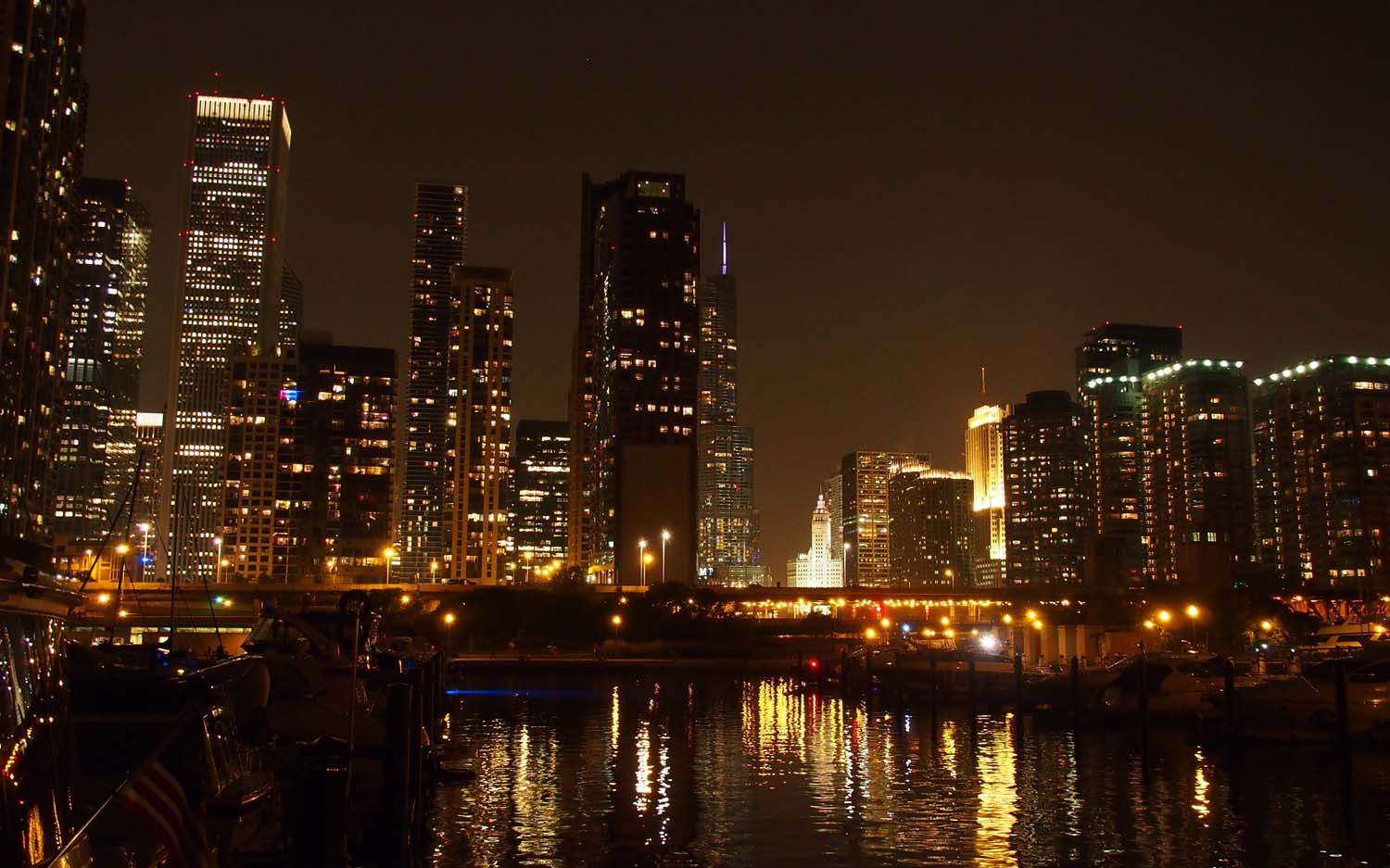
After dinner we rode the water taxi back to see Chicago at night. The only way to go to (or return from) Chinatown.

CHGlassCeiling

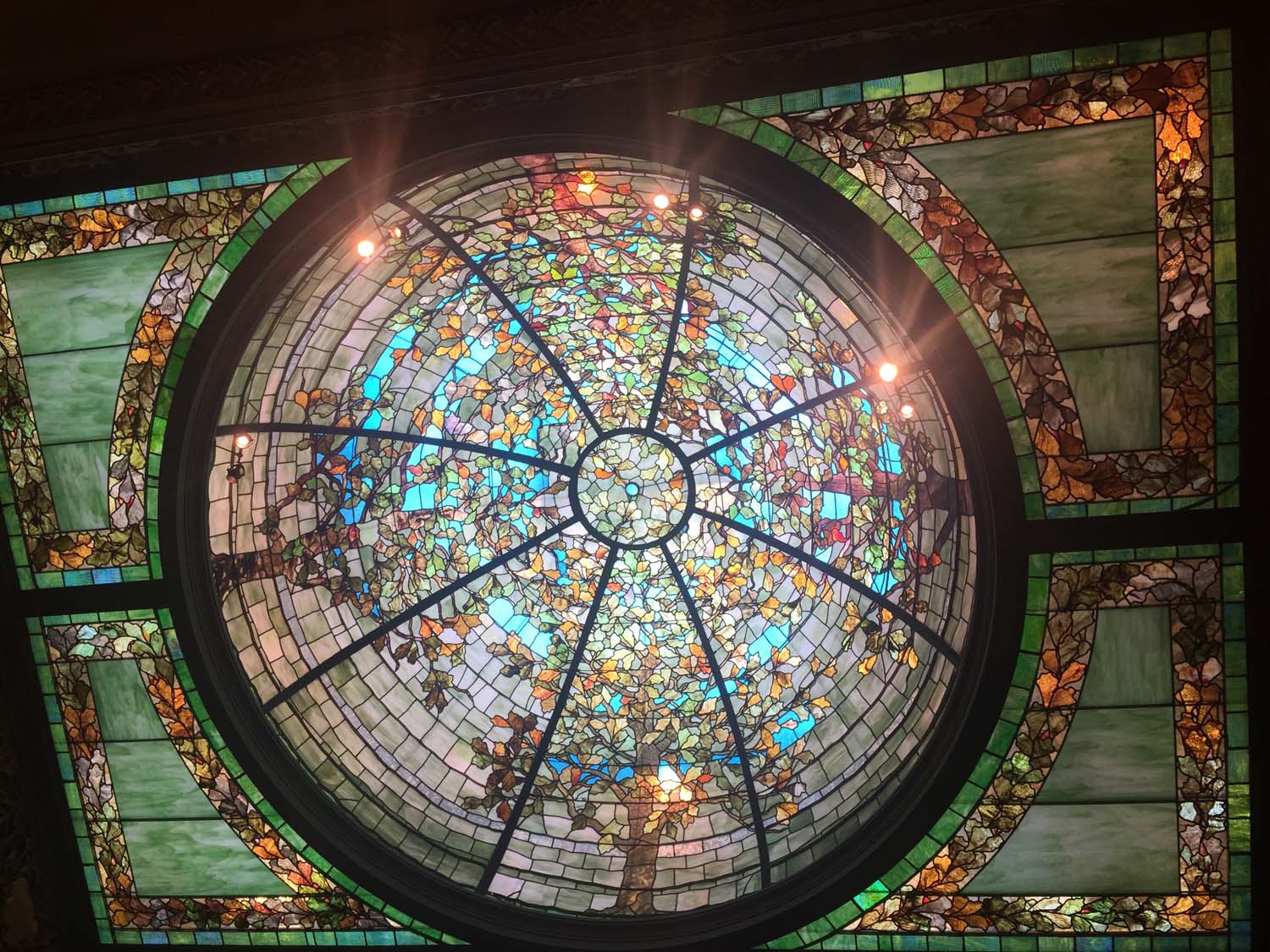
What to show of this fantastic house? How about the ceiling in gallery room?

Wednesday we started at the Driehaus Museum, one of the finest Gilded Age homes in Chicago built after the Chicago Fire. While certainly not the largest, this had to be the finest finish work with wood, tile, marble and metalwork we have yet seen in a home. There is absolutely no question that they don’t build them like they used to.

There was a Bloomingdale’s Home store a block away that Sue wanted to see. It was hard not to notice since it’s building was originally done for the Nobles of the Mystic Shrine. It was completely modernized inside, so I left to visit Holy Name Cathedral, the Tribune Tower and other places along the Magnificent Mile. I got back in time for Sue to finish her shopping at Trader Joe’s across the street from Bloomingdales.
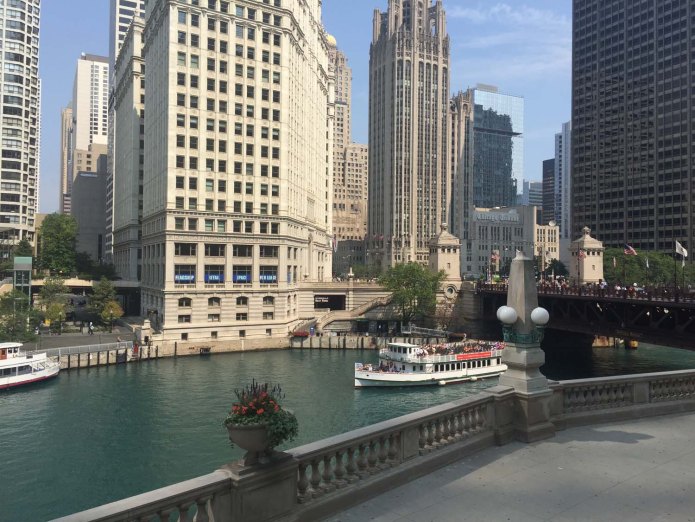
CHRiverCity

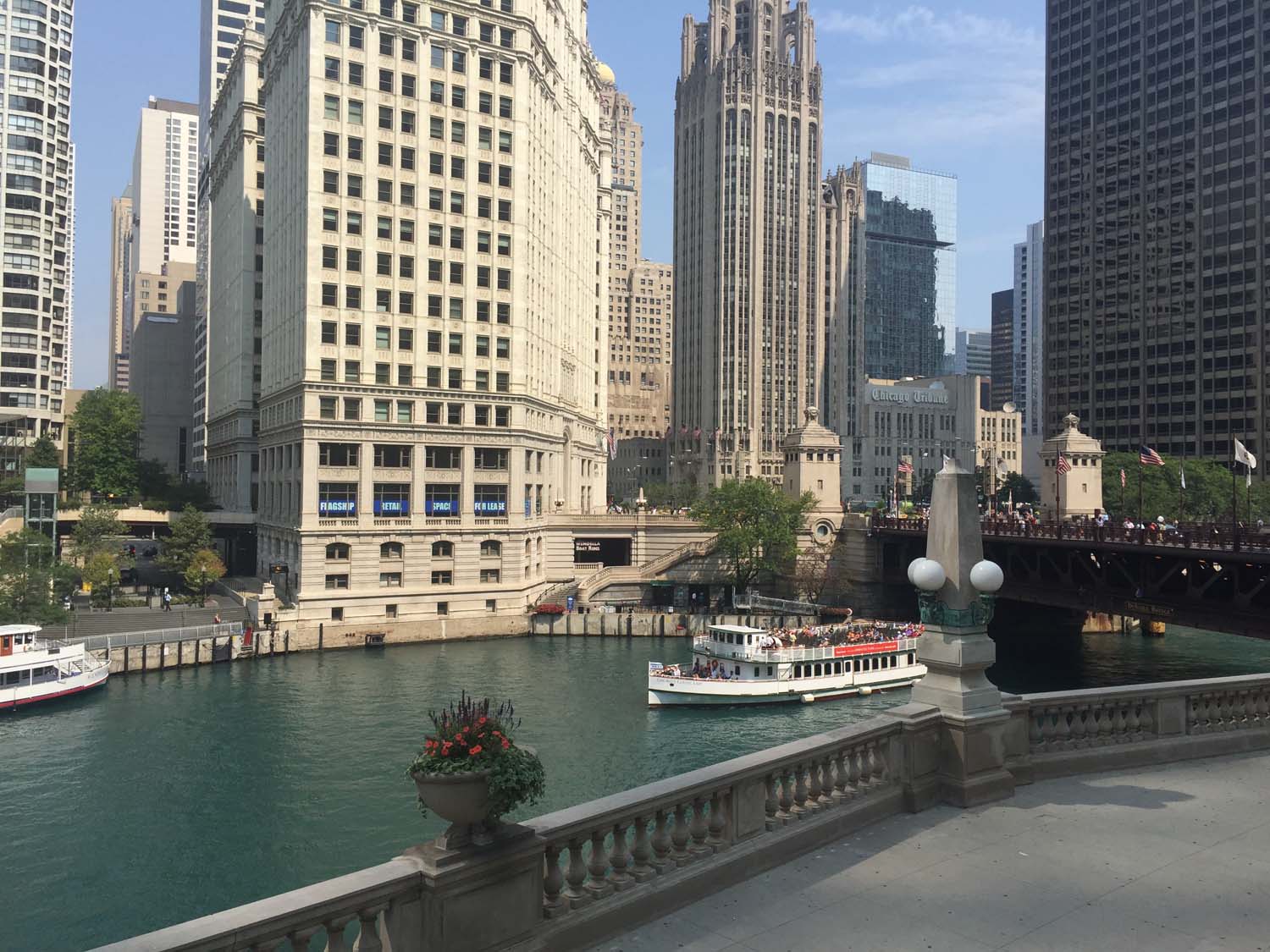
Our water taxi ride started here, at the base of the DuSable Bridge.

After getting groceries back to the boat and a short rest there was still time to go to the Shedd Aquarium which was open until 10 PM on Wednesday. While billed as the second largest in the world (after Atlanta) it was not so great. Most of that size was in stadiums for porpoise and other shows, play zones and large terraces. We did learn a lot about African fresh water lakes and fish that we had no idea about before. Lake Tanganyika is really an interesting place.

So now, on Thursday morning, we’re taking it easy. Maybe we’ll go into town a bit, but nothing big. We’ll leave tomorrow for twelve miles south to the Calumet channel entrance. We’ll have a great many bridges. Most we’ll go under with a few feet clearance but some will have to draw for us. We’ll also hit three locks on the way to the wall at Joliet. These will be commercial locks, much larger than what we’ve been in so far, and with priority for the large commercial freight barges. One tow can have a number of barges that may have to be broken up to get through the locks. We may have to wait awhile.
Standard